Your mind, as it thinks, constantly generates thoughts. There can be many thousands of thoughts a day, and these can play a very important role in happiness.
Some thoughts are “positive” for your happiness; when you face challenges, they help you think clearly and stay positive. On the other hand, some thoughts are “negative” for your happiness, as they, when facing challenges, tend to distort reality and lower your mood.
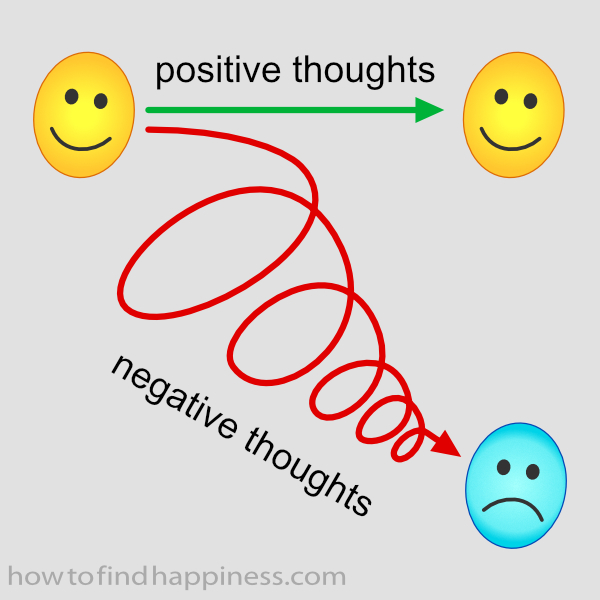
To better understand how thoughts can influence your happiness, let us think of a simple scenario.
Imagine that two people are working for an excellent company. This company pays big salaries and offers numerous luxurious perks. Unsurprisingly, both these people are very happy.

But now imagine that things go wrong with this company. The management makes some very poor business decisions, resulting in the company losing money. Eventually, with no money to continue operating, the company closes, and the two people lose their jobs.
Unsurprisingly, having lost their lucrative jobs, both workers are now feeling very unhappy.
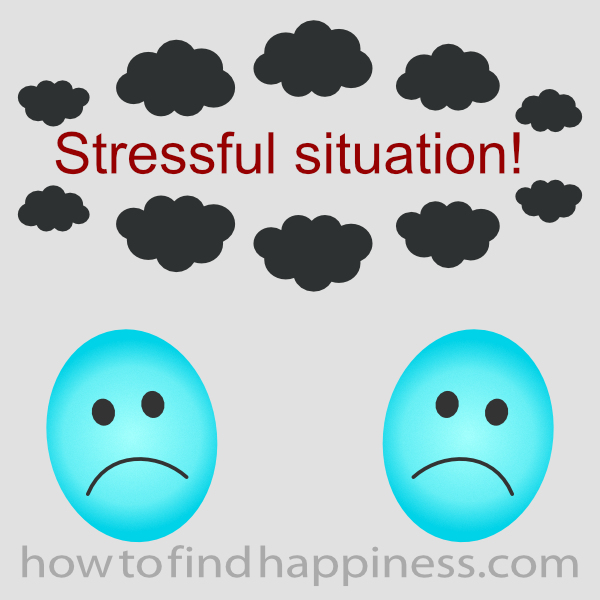
Now, let’s imagine that, when facing the stressful situation of losing their jobs, the two people think differently.
The first person thinks, “Well, that was a great job, but that is no more. There is no point in thinking of what I have lost. I am not a failure; it’s just unfortunate that the company collapsed. Even though there are not many jobs out there at the moment, I must hope for the best and start job hunting to find a new job.”
On the other hand, the second person has thoughts such as, “How terrible! Bad things happen only to me. I will never get another job as I am useless. There is no point trying, as the world is useless and unfair.”
Both people are facing the same problem, but each has a markedly different way of “thinking” about it.
The first person’s thoughts are “positive” because they do not make things worse than they actually are. This person’s thoughts keep their mind in a state where they can effectively consider potential solutions. The positive outlook will help the person move on and ultimately find a new job.
On the other hand, the second person’s thoughts are “negative” as they only make the person feel bad and offer no constructive solutions. These thoughts make a difficult situation worse than it needs to be. With these negative thoughts, the person may well spiral into depression, which itself may make finding a new job difficult.
Both people face the same problem, but by thinking differently, each has a different mental state, one positive and the other negative. In this way, thoughts can be an important influence on happiness.
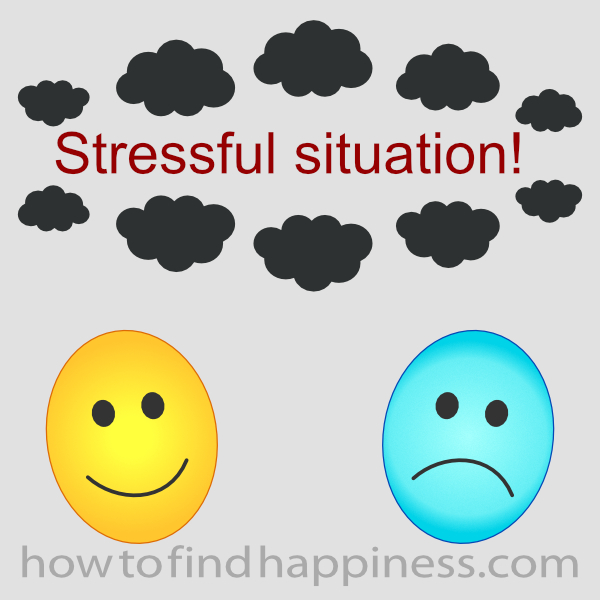
As you have seen, the way you “think” can determine your thoughts and your happiness. Certain negative ways of thinking can generate negative thoughts, which in turn make you unhappy. This website will describe negative thinking patterns and negative thoughts, so you can recognise them when they occur in you. It will also give you practical mental tools to overcome negative thinking and thoughts.