There is a concept which psychologists call the “negativity effect”, which is important to understand as it’s a common cause of unhappiness. It has to do with how the human mind often thinks, and I will explain it to you now.
In your day-to-day life, you face various experiences, some positive and some negative. Unfortunately, the human mind tends to focus excessively on negative experiences while downplaying positive ones. This can lead you to view the world more negatively than it really is. The brief example will help you to better understand the “negativity effect”.
Imagine that a person we will call Emma unfortunately lost her expensive mobile phone on the way to work. It was a really nice phone and quite new as well, so a painful loss indeed. However, later in the day, there was good news. Emma’s manager called her to the office and informed her that, after reviewing her annual performance, the company had decided to raise her salary significantly. You would expect Emma to be thrilled with this news, but sadly, on this occasion she was feeling low. Why? The reason could be the “negativity effect”, where Emma’s mind was mostly focusing on the negative experience of losing her mobile phone, while minimising the positive event of a salary increase.
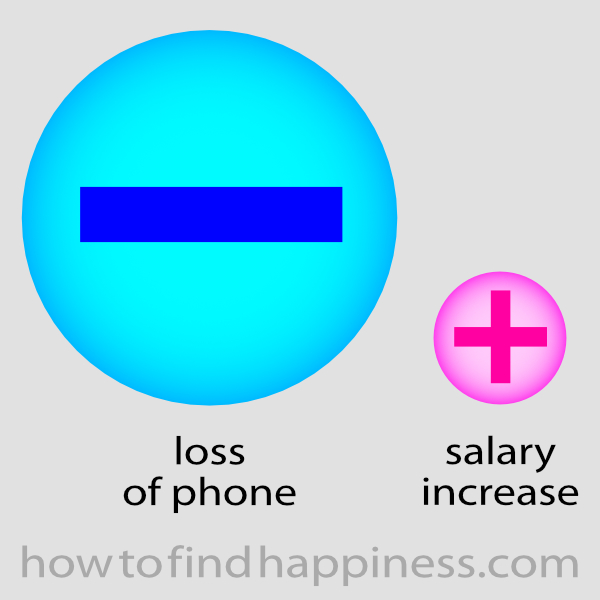
The “negativity effect”, where you focus on the negative while minimising the positive, can make you feel that things are worse than they actually are, as positive events that could counteract the negativity are overlooked.
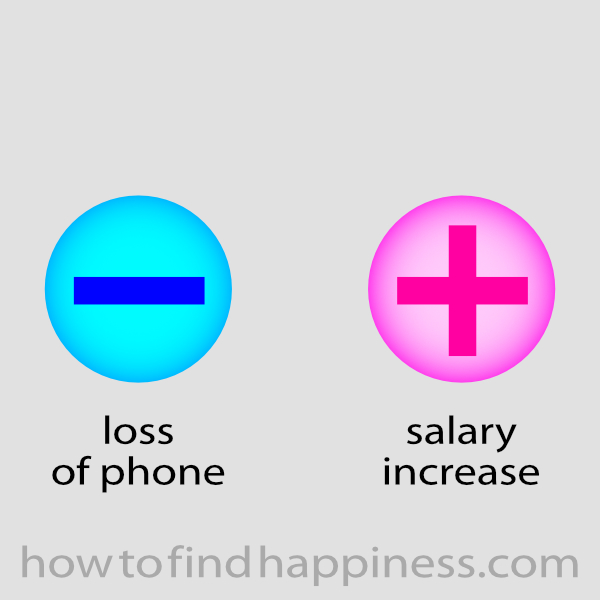
A more “helpful” way to think is to view both positive and negative events objectively. Perhaps thinking, “Yes, it’s upsetting that I lost my expensive mobile phone, but on the brighter side, I got a nice salary raise at work”. It’s about treating events in your life in a balanced way, not just unnecessarily focusing on the negative.
The human brain’s tendency to focus on negative things may have been inherited from our ancestors many thousands of years ago, when they lived in forests. In such an environment, one’s survival would have depended on “remembering” negative events. For example, imagine that one of our ancestors was daydreaming and walking without a care in the world when they accidentally stepped on a lion’s tail! The angry lion would have given chase to our ancestor.

If our ancestor survived the ensuing chase, it would have been in his or her survival interest not to forget the negative event of stepping on a lion’s tail. Focusing on the negative event would have helped him or her remember the importance of not daydreaming while walking in the forest. While most of us nowadays don’t walk among lions and other dangers in forests, the tendency to focus on negative events may still persist in our brains.
Focusing on negative events can cause unnecessary unhappiness, as it may falsely make us feel that things are worse than they really are. It’s therefore essential to recognise and overcome such thoughts when they arise. Later on this website, I will share simple psychological tools you can use to do this.