In the previous section, you learned about the “naming the thought” tool to challenge negative thoughts. On this webpage, I will share another effective tool which I call the “true evidence” tool.
We all love imagination, and it can be a blessing that can bring much joy.

Unfortunately, imagination, when it goes wrong, can lead to negative thoughts. That is, you may imagine things to be negative when the reality is different.
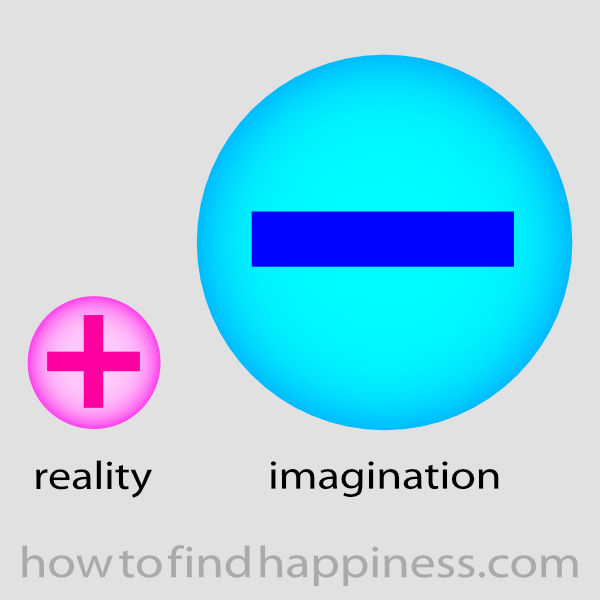
One way to challenge negative thoughts stemming from imagination is to think that you are in a court of law! In court, you do not find a person guilty on the basis of “imagination”. That is, the Judge does not say, “I think you should go to prison because I imagine that you stole your neighbour’s bicycle”. Rather, courts rely on true evidence, such as a witness statement or a video of the person stealing the bicycle. As in a real court, you can check in your mind whether the negative thought is based on evidence or imagination. i.e. what evidence do you have that proves that the negative thought is true, and what real evidence do you have that proves that the negative thought is not true? Once you do this, you will soon realise that you do not have much true evidence to support your negative thought.

The examples below will help you to understand this tool better.
Suppose a person has the negative thought that “everyone in the office hates me”. In this situation, the person can look for evidence for and against the negative thought. Say the person has four colleagues in the office. One of those colleagues always shouts at the person, so this could be taken as evidence that that colleague “hates” the person. However, when looking at the other three colleagues, one is always smiling, another is always helpful, and the third is always polite. When comparing the evidence for and against the negative thought, it quickly becomes clear that only one colleague is unpleasant, whereas the other three colleagues are very nice. The person realises that the overall evidence does not support the negative thought, “everyone hates me”. In this way, the negative thought is now weakened, as the person realises it was based on imagination rather than evidence.
Here is another short example of using the “true evidence” tool being used to challenge a negative thought.
Anita is to have a blood test tomorrow to see if she has diabetes. Even though the blood test is tomorrow, she has already decided that she has diabetes, and this makes her very anxious. As Anita notices this negative thought, she decides to use the “true evidence” tool to challenge it.
Anita tries to gather any true evidence that justifies her negative thought that she has diabetes. She then realises that she actually has no true evidence that she has diabetes, as no blood test has been done so far (the blood test is tomorrow). She then tries to gather evidence that she does not have diabetes. Again, she realises, at this point, there is no evidence to prove that either. Anita realises that she has no evidence to prove either way whether she has diabetes or not. She realises that the negative thought that she has diabetes is not valid, and was based on imagination rather than reality. This realisation weakens the negative thought, and she is able to not worry before her blood test.
As you have seen in the examples, when searching for evidence, you often realise that there is little or no evidence to support a negative thought. The “true evidence” tool is very effective at weakening thoughts, and once you do it a few times, it becomes very quick.