On this page, I will explain a common negative thinking pattern, which psychologists call “catastrophic thinking.”
To understand what catastrophic thinking is, it’s important to understand that the human mind is designed to predict the future. It does this so that it can plan today’s actions to be prepared for the future. For example, suppose you are going on a long hike in the forest tomorrow. Your mind may think about future outcomes, such as rain or not finding a suitable place to buy food. So in this case, you may decide to take a small umbrella and pack some sandwiches. Imagining what may happen in the future is vital for survival. It helps you make decisions in the present that will lead to a better future.
When imagining the future, a balanced approach is to consider various possibilities. For example, you might think of a future where the weather will be fine, another future where there will be little rain, and a future where there will be torrential rain. You then think about the most likely outcome for the next day. No one can predict the future with certainty, but it’s about making a balanced guess.
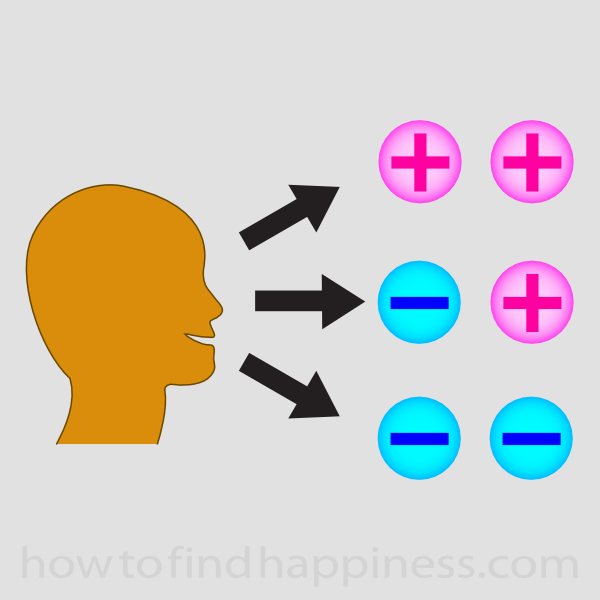
Unfortunately, this imagination system of your mind can sometimes go wrong and become negative. That is, you imagine only the worst possible outcomes, i.e., that everything in the future will be a “disaster” or “catastrophic.” You do not think of any future scenarios that might be less bad. This is what psychologists call “catastrophic thinking”.
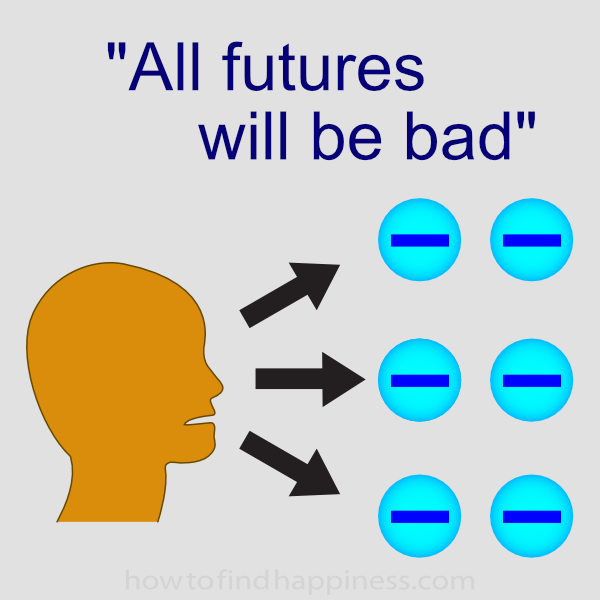
The example below will help you better understand catastrophic thinking.
When Susan arrived at work in the morning, her boss said, “I want to have an important meeting with you at the end of the day.” With only this information, Susan imagined only the worst outcome: that her boss would meet her to tell her she would lose her job. She did not imagine any other less negative reason for her boss to want to meet her. She spent the whole day wracked with anxiety, worrying about the impending meeting.
However, when she met her boss later, she learned that the boss was very happy with her progress in the company and wanted to offer her a promotion! In this example, her catastrophic thinking unnecessarily ruined her whole day.
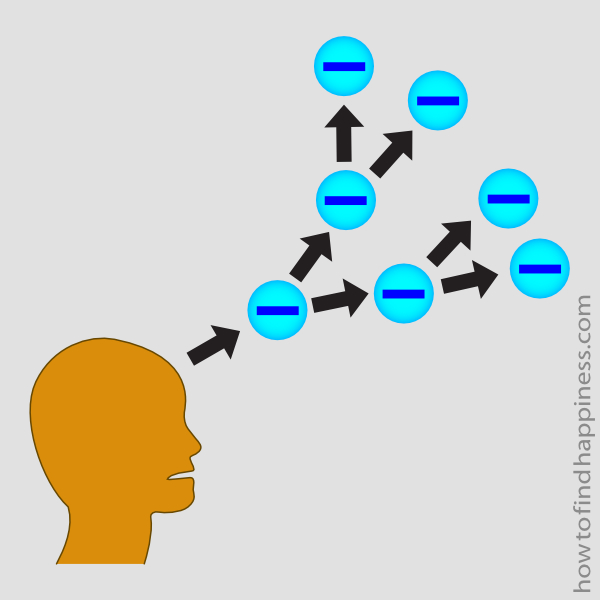
With catastrophic thinking, you may add further layers of imaginary “worst outcome” scenarios. For example, with Susan, she may add further scenarios to her original imagined scenario of losing her job, such as, “With the loss of my job, I would become extremely depressed, and because of this, my partner may leave me. I will not be able to afford the rent and end up being homeless, sleeping on the street”. With such a catastrophic imagination, Susan would experience unnecessary stress, since the outcome was unknown before she met her boss.
As you have seen, catastrophic thinking can cause unnecessary distress. If you are to find happiness, it’s important to overcome this type of thinking. I will later share with you simple psychological tools that you can use to help achieve this.